Career & Personal Branding

AI, Blog, Featured, HR & Work

Best AI Recruitment Tools for HR Teams: Complete Guide for 2026

If you work in HR or talent acquisition you know the feeling. A job posting goes live. Suddenly you have over 150 applications in your inbox. The perfect candidate is in there somewhere. Finding them takes hours. AI recruitment tools are designed to solve this problem. These tools have come a way since simple resume keyword matching. Now they can find candidates conduct video interviews, score applicants and even write outreach messages that sound human. In this guide we’ll look at the AI recruitment tools available now. We’ll compare them discuss their costs and help you choose the one for your team. Whether you’re a startup or a large HR department you’ll find something that fits your needs. What are the best AI recruiting tools for HR in 2026? If you only have a time here is what you need to know: Greenhouse is the best choice for hiring when you need something that does everything. Juicebox and Pin are great for finding people to hire using intelligence. HireVue is the best for doing a lot of video interviews. Workable is a choice for companies that are getting bigger because it has a lot of features and is easy to use.. Manatal is a good option for small teams that do not have a lot of money and are just starting to use artificial intelligence to hire people. The right tool, for you depends on what’s holding you back the most. Finding the right people looking at applications doing interviews or scheduling meetings. So keep reading to find the tool that solves the Greenhouse problem or the Juicebox and Pin problem or the HireVue problem or the Workable problem or the Manatal problem that you are having. Table of Contents What Are AI Recruitment Tools, and Why Do They Matter in 2026? What Should HR Teams Look For in an AI Recruiting Tool? Which AI Recruitment Tools Are Best for Sourcing Candidates? Which Tools Are Best for Screening and Matching? Which Tools Are Best for AI-Powered Interviews? Real-World Examples Key Statistics on AI in Recruitment Comparison Table Pros & Cons of Using AI Recruitment Tools FAQ Section Key Takeaways Conclusion What Are AI Recruitment Tools, and Why Do They Matter in 2026? AI recruitment tools use machine learning and natural language processing to handle parts of hiring. These tools help with finding candidates checking resumes setting up interviews and analyzing responses. For example of a recruiter reading 200 resumes an AI tool can rank them by how well they fit the job in just a few minutes. It can then flag the 20 resumes and explain why they are ranked high. The reason AI recruitment tools matter more now is that many companies are hiring people.. The recruiting teams are not getting bigger. Many recruiters now manage around 20 jobs at a time. This is hard to handle without help. AI tools save recruiters time so they can talk to people of entering data. Recruiters can focus on what they do talking to people. AI recruitment tools give them hours in their week. What Should HR Teams Look For in an AI Recruiting Tool? Before choosing a tool it’s helpful to understand what makes a great platform different from an one. Does it work well with your ATS? A recruiting tool that doesn’t connect to your tracking system actually creates more work. Look for connections with platforms like Greenhouse, Lever, Workday or SmartRecruiters. Can it explain how it scores candidates? If an AI tool says a candidate is a match you should see why. This is important for fairness and following the law. Does it help reduce bias or make it worse? Good AI recruiting tools focus on skills and experience not things like age or where you live. Ask the people selling the tool how they make sure it’s fair. Is the price okay for your team? Some tools charge per person others per job and others charge a fee. A tool that works for a startup might not work for a big company. How hard is it to learn? Some platforms are easy to start using while others take weeks to get started. Be honest, about how time your team has. Which AI Recruitment Tools Are Best for Sourcing Candidates? Finding the right people is usually the part for teams that are hiring especially when they are looking for people who are not really looking for a new job. Juicebox is really good at this. It allows people who are hiring to search through a list of over 800 million people using simple language that anyone can understand, instead of using complicated search terms. This is especially helpful for teams that spend a lot of time looking for and talking to potential candidates but bigger teams might still need to use another tool to manage everything. Pin is also a player now. The people who made Interseller, which was bought by Greenhouse also made Pin. It helps with finding people sending them messages and scheduling meetings in one place. It says that it gets a lot of responses from the messages it sends automatically and it has a version that people can try before they decide to pay for it. Findem is another choice, especially for people who work for agencies that help companies find new employees. It is good, at finding people that other search tools might miss because it uses intelligence to understand what the words really mean instead of just looking for certain keywords.   Which Tools Are Best for Screening and Matching? When you have people who want to work for you the next big problem is finding out who is really good enough to talk to. Workable is very helpful with this. It has a tool that uses computers to look at the people who want to work for you. It gives them a score. This score shows how well they match what you are looking for in a worker. It can
Career & Personal Branding

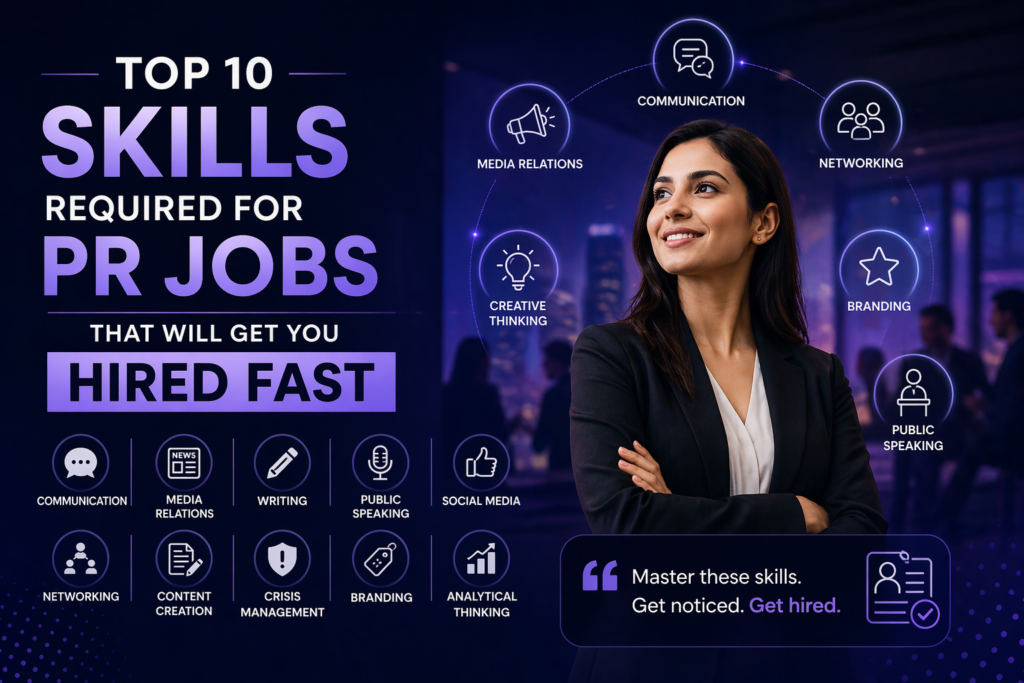
Top 10 Skills Required for PR Jobs That Will Get You Hired Fast

Why PR Skills Matter More Than Ever Public Relations (PR) is not just about promoting a brand, it’s about building trust, managing reputation, and creating meaningful connections with the audience. In today’s competitive job market, simply having a degree is not enough. Recruiters are actively searching for candidates who understand the real skills required for PR jobs and can apply them practically. Whether you’re a fresher, an HR professional transitioning into PR, or someone building their own agency, mastering the right skills can significantly speed up your hiring journey. The good news? Most of these skills can be learned and improved with practice. Let’s dive into the Top 10 Skills Required for PR Jobs That Will Get You Hired Fast, explained in detail so you can actually start working on them. Top 10 Skills Required for PR Jobs That Will Get You Hired Fast 1. Strong Communication Skills Communication is the backbone of PR. You will constantly interact with clients, journalists, influencers, and internal teams. This means you must be able to express ideas clearly, confidently, and professionally. It’s not just about speaking well; it’s also about listening. Understanding client needs, media expectations, and audience reactions is equally important. Strong communication skills ensure that your message is delivered correctly without confusion, which is why it is one of the most critical skills required for PR jobs. 2. Writing & Content Creation Writing is a daily task in PR. From press releases and email pitches to social media captions and blogs, content creation is everywhere. Good writing in PR means the following: Being clear and concise Avoiding grammatical errors Writing in a tone that suits the brand You don’t need to be a novelist, but you must know how to write content that grabs attention and delivers value. Practicing daily writing can significantly improve these essential skills required for PR jobs. 3. Media Relations PR professionals act as a bridge between brands and the media. Building strong relationships with journalists, editors, and media houses can help you secure coverage for your clients. This skill involves: Knowing how to pitch stories Understanding what journalists are looking for Maintaining long-term professional relationships Good media relations can give your client free publicity and credibility, making it one of the most powerful skills required for PR jobs. 4. Social Media Management Modern PR goes beyond traditional media. Social media platforms are now essential tools for brand communication. You should know how to: Create engaging posts Respond to audience comments Manage brand reputation online Analyze performance metrics Being active and strategic on platforms like Instagram and LinkedIn is now a must-have among the skills required for PR jobs. 5. Crisis Management Every brand faces difficult situations such as negative reviews, public backlash, or unexpected controversies. A PR professional must stay calm and handle these situations smartly. Crisis management includes: Responding quickly and professionally Controlling damage to brand reputation Communicating the right message at the right time Companies highly value this skill because it directly impacts their public image, making it one of the most important skills required for PR jobs. 6. Networking Skills PR is a relationship-driven industry. The more people you know, the more opportunities you create. Networking doesn’t just mean collecting contacts; it means building genuine connections. This includes: Attending industry events Connecting with professionals on LinkedIn Engaging with influencers and media people Strong networking can open doors to job opportunities, collaborations, and media coverage, making it a key part of the skills required for PR jobs. 7. Creativity & Storytelling PR is not just about sharing information; it’s about telling stories that people remember. Creativity helps you present a brand in a unique and engaging way. For example: Turning a simple product launch into a compelling story, Creating campaigns that emotionally connect with the audience Creative storytelling helps brands stand out in a crowded market and is one of the most exciting skills required for PR jobs. 8. Research & Analytical Skills A successful PR strategy is based on data and research. You need to understand your audience, competitors, and industry trends. This skill includes: Market research Competitor analysis Measuring campaign success When you make decisions based on data rather than assumptions, your PR strategies become more effective. That’s why research is among the most practical skills required for PR jobs. 9. Time Management PR professionals often handle multiple tasks at once: client meetings, content creation, media follow-ups, and campaign planning. Without proper time management: Deadlines can be missed Work quality can suffer Stress levels increase Using tools like calendars and task managers can help you stay organized. Efficient time management ensures smooth workflow and is a must-have among the skills required for PR jobs. 10. Adaptability & Learning Attitude The PR industry is constantly evolving, especially with digital trends changing rapidly. What works today may not work tomorrow. Being adaptable means: Learning new tools and platforms Staying updated with trends Accepting feedback and improving A learning attitude shows employers that you are future-ready, making it one of the most underrated yet essential skills required for PR jobs.

Career & Personal Branding

What to Wear to an Interview in 2026 (Complete Outfit Guide for Success)

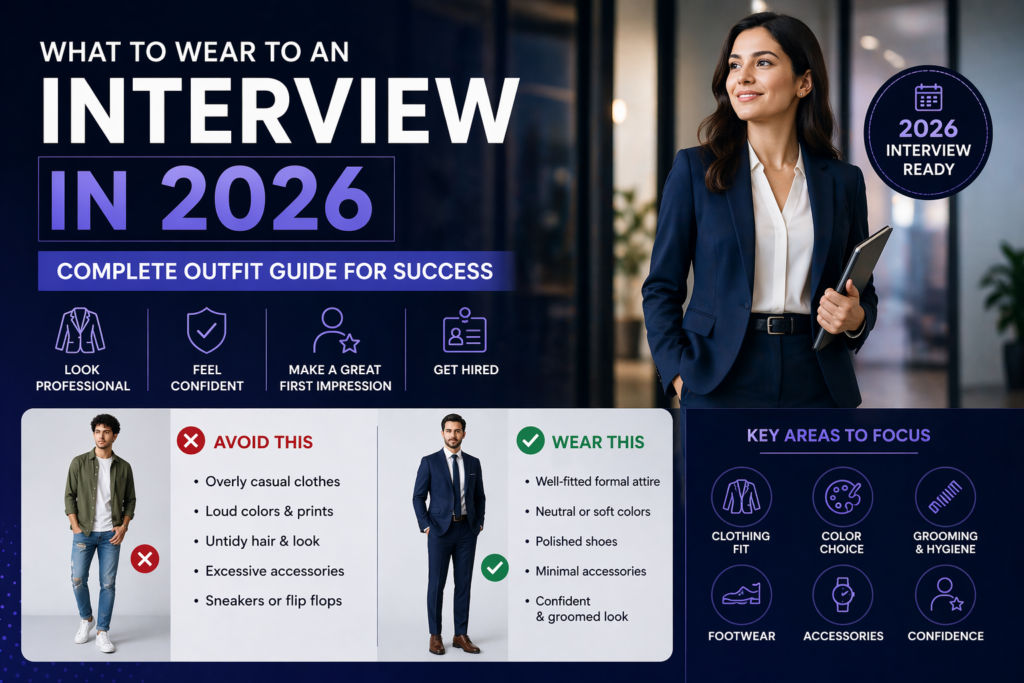
First Impressions Start with Your Outfit When it comes to interviews, your appearance speaks before you even say a word. The way you present yourself creates an immediate impression, which can influence how the rest of the conversation goes. This is why understanding what to wear to an interview is so important. Many candidates spend hours preparing answers and researching the company, but often overlook their outfit. The truth is, dressing appropriately not only shows professionalism but also boosts your confidence. When you feel good in what you’re wearing, it reflects in your body language and communication. If you’ve ever felt confused about what to wear to an interview, you’re not alone. The good news is that with a few simple guidelines, you can choose an outfit that helps you make a strong and lasting impression. What to Wear to an Interview Deciding what to wear to an interview depends on several factors, such as the company culture, job role, and industry. However, some basic rules apply to almost every situation. 1. Understand the Company Culture: Before choosing your outfit, take time to research the company. Different workplaces have different dress codes, and knowing this will help you decide what to wear to an interview more accurately. For example, corporate offices usually expect formal attire such as suits or blazers. On the other hand, startups and creative industries may allow smart casual outfits. If you’re unsure, it’s always better to dress slightly more formal than required. 2. Choose Formal or Smart Casual Attire: A safe approach when deciding what to wear to an interview is to go with formal or smart casual clothing. For women: A formal shirt or blouse paired with trousers or a knee-length skirt A blazer for a polished look Closed-toe shoes For men: A formal shirt with well-fitted trousers A blazer or suit for a professional touch Clean, polished formal shoes This kind of outfit works well for most interviews and helps you look confident and prepared. 3. Stick to Neutral Colors: Color plays an important role in how you are perceived. When choosing what to wear to an interview, stick to neutral and subtle colors like black, navy blue, white, grey, or beige. These shades give a clean and professional appearance and ensure that the interviewer focuses on your skills rather than your outfit. Bright or flashy colors can sometimes be distracting, so it’s best to keep things simple. 4. Focus on Grooming and Details: Your overall appearance goes beyond just clothes. Grooming is an essential part of deciding what to wear to an interview. Make sure: Your clothes are clean and well-ironed Your hair is neat and tidy Your nails are clean You avoid strong perfumes Small details can make a big difference and show that you pay attention to how you present yourself. 5. Prioritize Comfort and Fit: No matter how stylish your outfit is, if it’s uncomfortable, it can affect your confidence. While deciding what to wear to an interview, make sure your clothes fit well and allow you to sit, walk, and move comfortably. Avoid clothes that are too tight, too loose, or something you’re not used to wearing. The goal is to feel confident and at ease throughout the interview. 6. Avoid Common Dressing Mistakes: While understanding what to wear to an interview, it’s equally important to know what to avoid. Try not to wear: Casual outfits like ripped jeans or graphic t-shirts Overly bright or flashy clothing Wrinkled or unclean clothes Heavy makeup or strong fragrances Dressing too casually can make you seem unprepared, while overdressing excessively can make you feel out of place. Balance is key.

Career & Personal Branding

Tell Me About Yourself In An Interview

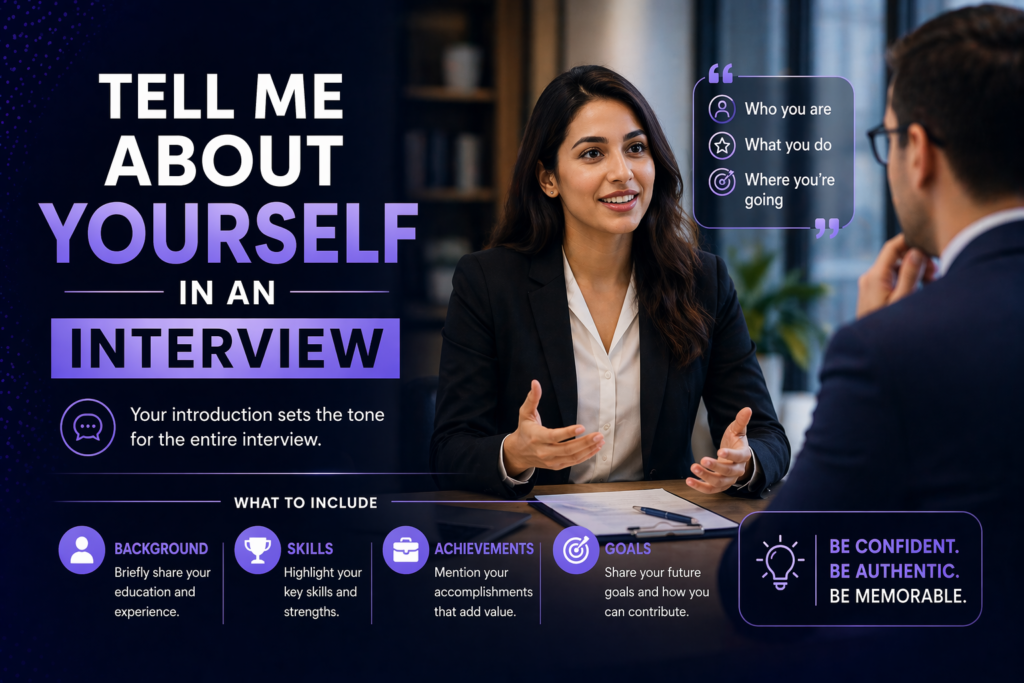
Introduction: “Tell Me About Yourself” One of the most common yet tricky questions candidates face is “Tell me about yourself in an interview.” It may sound simple, but this question often decides the first impression you create on the interviewer. Many candidates either say too much or struggle to say anything meaningful. The key is to give a clear, structured, and confident answer that highlights your strengths and aligns with the job role. In this guide, you’ll learn exactly how to answer “Tell me about yourself in an interview” with the right structure, examples, and expert tips. Why Do Interviewers Ask “Tell Me About Yourself”? When interviewers ask “Tell me about yourself in an interview,” they are not looking for your life story. Instead, they are trying to evaluate a few important things. First, they want to assess your communication skills. Your ability to present yourself clearly matters a lot in any role. Second, they want a quick summary of your background. This helps them understand your experience beyond what’s written in your resume. Third, they are checking how relevant you are for the position. A strong answer connects your skills and experience directly to the job. Lastly, they want to see your confidence level. The way you start your interview often sets the tone for the rest of the conversation. How to Structure Your Answer? The best way to answer “Tell me about yourself in an interview” is by using a simple and effective structure: 1. Present (Current Role or Situation): Start with what you are currently doing. Example: “I’m currently working as an HR executive with experience in recruitment and employee coordination.” 2. Past (Experience or Education): Briefly explain your background and how you got here. Example: “I started my career as a trainee coordinator, where I developed strong communication and organizational skills.” 3. Future (Career Goals): End by connecting your goals with the company. Example: “I’m now looking for an opportunity where I can grow in talent acquisition and contribute to a dynamic organization.” Using this structure ensures your answer is clear, professional, and impactful. Sample Answers for Different Candidates Fresher “I recently completed my graduation in BBA. During my studies, I developed an interest in HR and gained practical exposure through internships. I am eager to start my career where I can apply my skills and grow professionally.” Experienced Candidate “I have over 3 years of experience in HR, specializing in recruitment and onboarding. In my current role, I manage end-to-end hiring processes. I’m now looking for a challenging role where I can contribute strategically and grow further.” Career Switcher “I began my career in sales, where I developed strong communication and negotiation skills. Over time, I discovered my interest in HR and completed relevant certifications. I’m now looking to transition into a full-time HR role.” Common Mistakes to Avoid While answering “Tell me about yourself” in an interview, avoid these mistakes: Giving too much personal information Repeating your resume word for word Speaking without structure Taking too long to answer Showing lack of confidence. Avoiding these mistakes can make your answer more professional and impressive. Pro Tips to Impress the Interviewer To stand out when answering “Tell me about yourself in an interview,” follow these expert tips: Customize your answer for each job Keep your answer concise (1–2 minutes) Use simple and clear language Practice before the interview Focus on achievements and skills Maintain confidence and eye contact. A well-prepared answer can instantly boost your chances of success. Frequently Asked Questions:

Scroll to Top